CategoriesNews

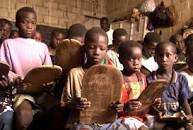
Coronavirus: What to Do for Talibé (Begging) Children?

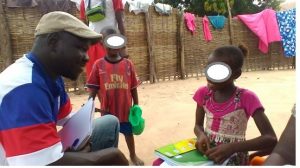
It is said that they are tougher than the average child, due to the resilience and immunity conferred by street life and hardship.

I am willing to believe they are immune to certain infections, and good for them. But are they immune to a mutating virus that poses more uncertainty to our modern states than we have ever experienced?

I cannot recall a time, because of an infectious disease, when economic powers like the USA went so far as to close their airports to all of Europe. I never recall France closing schools, universities, bars and restaurants because of a flu epidemic, or President Macron considering using the army to enforce collective public health rules.

This shows that what is happening is neither trivial nor entirely under control. And when situations like this arise, one can never do enough for one’s own health and that of others.

This morning a colleague rightly told me that if the presidents of Senegal, Burkina Faso, Ghana and others decided to close schools and confine students, then the other children who are out on the streets have no business being there either. I believe it is an absolute necessity to remove them from the risks linked to the spread of this virus. The interest is twofold for our countries: they must be protected like any citizen, especially since they already live in real vulnerability, and must not be exposed to risky contact given how fast the contagion spreads and how precarious these children’s living conditions are; and it is also in the interest of the whole population and of states that these children not become key vectors for spreading the virus.

SSI-AO is working on a protection plan for these children across all the countries concerned in the region. This plan is inspired by the national strategic plans developed with each country during the regional meeting on alternative care in May 2012 in Dakar.

The lines of work revolve around: self-protection for talibé children and young people, giving them the reflexes and means to protect themselves in their current living environment (the street); removing them from risky contacts that could endanger them; identifying and preparing alternative living arrangements, whether reception or transit centers, host families, or transit shelters; and initiating the process of family reintegration as soon as the health situation allows.

Service Social International has extensive experience in alternative care and is ready to collaborate with any government, agency or organization with a genuine commitment to these populations, to protect them from this global scourge about which we have only one certainty: we do not have it under control!

Dr. Djibril FALL, Director of SSI-AO. SSI-AO contact: info@ssiao.org
CategoriesNews

Child Abuse in the Daaras: On the Awakening of Victims

My name is Djibril Fall, I am African and a Senegalese national. Like many of us who do it quietly, I aspire to make my time on earth useful to as many people as possible, starting with those who need it most.

I believe I have had the immense good fortune that God guided my personal and professional commitment toward the defense of human dignity, alongside children and young people. It is a stroke of fortune given everything a child represents, both in the spiritual symbolism of my religious and traditional beliefs and in the concrete outcomes that can result from properly supporting such a being. It is a chance to be able to continue a tradition upheld both by our African cultures and by the religious beliefs that guide our lives today.

As I write these words, I think of everything I was taught by Mame Abdou and Serigne Saliou. And I admit I am afraid! The fear of a simple, perhaps uneducated human being who keeps turning over what he has learned from the teachings of the Prophet Muhammad (PBUH) regarding his relationship with children. I am afraid because what I see and what I hear bears no resemblance to what I was taught about my religion.

My religion has recognized the child as a being “without sin,” in other words a being who has never “done anything wrong,” who is not “responsible.” So I want to understand why we would harm someone who has “done nothing wrong” in the “eyes” of God.

The argument put forward by those who defend the mistreatment of talibé children is simple: “we went through the same thing, and yet here we are today.” Gentlemen, I tell you: you are survivors! But how many did not survive? How many were scarred for life? How many turned out badly?

A survivor can develop three attitudes toward these tormentors: visceral hatred that leads to a strong, unchecked desire for revenge; unconscious sympathy, nicknamed Stockholm syndrome; or complete denial of one’s history of abuse, which often pushes one to build a new life.

All this to say that whatever way a victim of abuse reacts, that person needs personal support, social support, and a public system that guarantees their wellbeing. The Quranic teachers who reproduce toward children the same system of abuse they themselves experienced — and who, moreover, defend it — also need to be helped, supported, and strengthened. And this is the responsibility of religious and political authorities.

My name is Djibril Fall, and I work within the West Africa Network for the Protection of Children, the RAO. Our work is to restore dignity to vulnerable children without family ties and to support them in their development prospects, wherever they may be in our region.

No! Defending the dignity of a human being is not being a freemason or serving the enemies of Islam! No! Denouncing abuse is not an act dictated by the West. We are Africans, and we also follow the guidance of our oldest texts, those that governed, for example, a great empire like the Mandé, where the dignity and physical integrity of the child were guaranteed.

Yes, we will mobilize legitimate resources wherever they may be found, to protect, support and ensure the dignity of our children and their future. But we do so in full coherence with our beliefs.

Dr. Djibril FALL

CategoriesNews

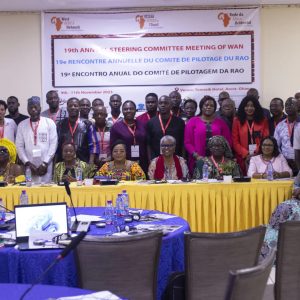
15th COPIL Steering Committee Meeting in Saly, Senegal

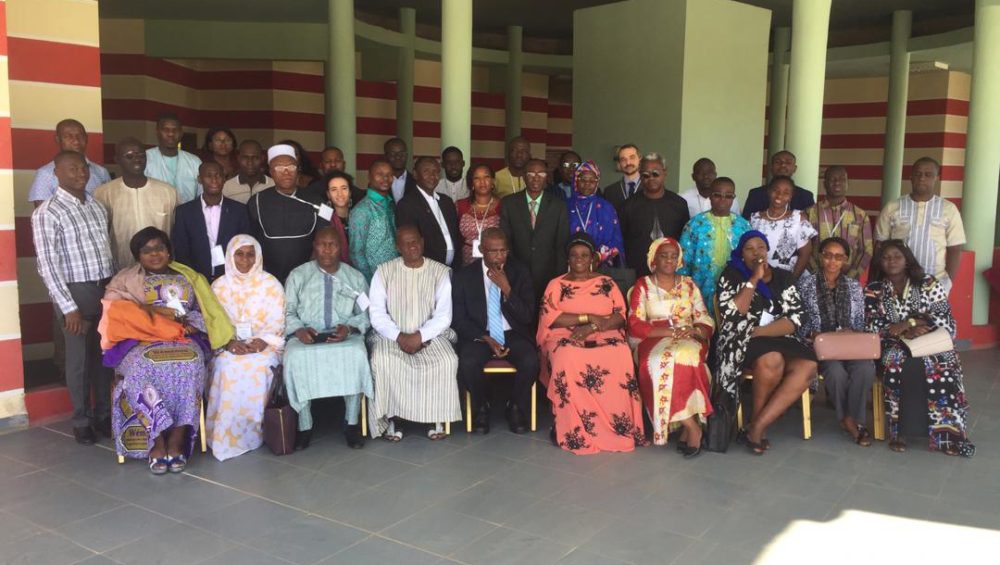
COMMUNIQUÉ — 15TH MEETING OF THE STEERING COMMITTEE OF THE WEST AFRICA NETWORK AND THE ANNUAL PEER REVIEW FOR CHILD PROTECTION (RAO). DECEMBER 3-4, 2019, SALY, SENEGAL.

1. The 15th meeting of the Steering Committee of the West Africa Network and the annual peer review for child protection was held from December 3 to 4, 2019, at the Amaryllis Hotel in Saly, Senegal. The meeting was held under the auspices of the Government of the Republic of Senegal, under the authority of the ECOWAS Commission through the Department of Social Affairs and Gender, with the technical support of Service Social International West Africa (SSI-AO), and sponsored by the European Union and the Swiss Agency for Development and Cooperation.

2. This meeting brought together Member States (Benin, Burkina Faso, Côte d’Ivoire, Guinea-Bissau, Guinea, Mauritania, Niger, Nigeria, Senegal, Togo and Gambia), alongside international organizations, civil society organizations and representatives of children and young people (MAEJT), to discuss the commitments made at the Banjul meeting regarding child protection signposts, to present good practices that could inspire different countries, and to explore new prospects for ensuring that children on the move are taken into account in national child protection policies, and to adapt the ECOWAS Protocol on Free Movement of Persons and Goods to the new realities states are facing.

3. States present at this meeting welcomed the efforts made by ECOWAS to ensure free movement of goods and people throughout its space. They also pointed out certain aspects of the protocol that could be improved with regard to taking into account issues linked to the mobility of children and young people. To this end, participants agreed to build on the work already carried out by SSI-AO to make concrete proposals that should lead to an additional protocol to the existing ECOWAS framework on the free movement of goods and people. For national ownership, it will be up to each country to organize local consultations with children’s organizations to ensure their opinions are taken into account in the process.

4. It should be noted that the countries present at this meeting, through their presentations, have undertaken actions to reproduce, promote and popularize the protection signposts. However, it should be emphasized that, overall, these countries were encouraged to accelerate their communication strategies to make the deployment of protection signposts a priority.

5. While underlining the relevance of these signposts, participants noted that their installation should follow a clear process to ensure that the places where they are placed become locations where children are genuinely safe.

6. In this vein, SSI-AO is invited to finalize the process for validating the “Manual for Training Intersectoral Actors on the Importance and Use of the Child Protection Signpost.” The draft document should be shared with stakeholders within a reasonable timeframe so their observations can be incorporated if necessary.

7. Participants welcomed the establishment, at the level of the ECOWAS Commission, of a mechanism to monitor implementation by member states of the ECOWAS strategy on children’s rights, starting in 2020. They also recalled the need to take into account certain priorities linked to the emergency situation being experienced by some countries in the sub-region.

8. Participants noted with interest the ECOWAS Commission’s proposal to combine into a single meeting the meetings of child protection directors on all the themes addressed in the strategy. They also suggested that discussions continue with the various parties regarding the practical organization of this meeting.

9. Members of the Steering Committee reiterated their thanks to SSI-AO and all technical and financial partners for organizing this 15th meeting, and committed to sharing the essence of the discussions with their respective governments.

Done in Saly, Wednesday, December 4, 2019.

CategoriesNews

PAPEV Strategic Planning Meeting

ECOWAS AND ITS PARTNERS PLAN ACTIVITIES FOR THE IMPLEMENTATION OF THE REGIONAL DIMENSION OF THE PROJECT TO SUPPORT THE PROTECTION OF CHILDREN VICTIMS OF RIGHTS VIOLATIONS (PAPEV) IN WEST AFRICA.

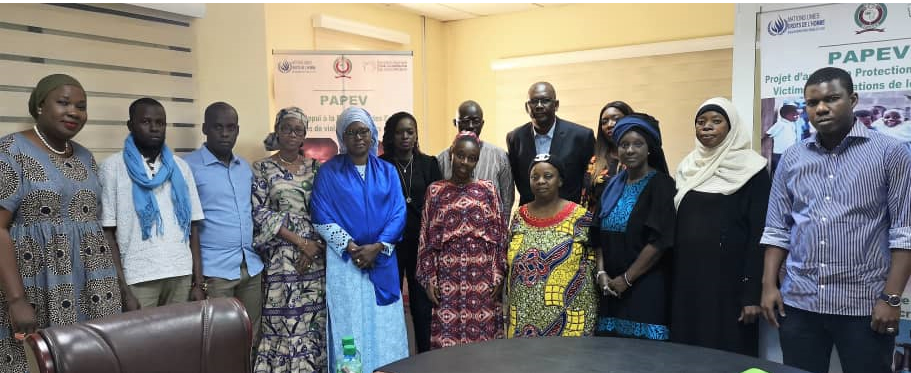
Dakar, January 30, 2020. Implementation of the regional dimension of the Project to Support the Protection of Children Victims of Rights Violations (PAPEV) officially began this Thursday, January 30, 2020, with a strategic planning meeting at the conference room of the Inter-Governmental Action Group against Money Laundering in West Africa (GIABA) in Dakar, Senegal. The opening ceremony of this meeting was chaired by Dr. Bolanlé ADETOUN, Director of the ECOWAS Gender Development Centre (CCDG), representing Dr. Siga Fatima JAGNE, ECOWAS Commissioner for Social Affairs and Gender.

The meeting was attended by several representatives of partner regional institutions working in child protection, notably the Office of the United Nations High Commissioner for Human Rights (OHCHR), the Senegalese ministries in charge of children and justice, the NGO ENDA Third World, Service Social International – West Africa (SSI-AO), and the West Africa Network for Child Protection (RAO). The main objective of this two-day meeting was to discuss with regional child protection organizations the arrangements and strategies for implementing PAPEV in the 6 beneficiary countries, in order to assess their level of understanding and knowledge of the project, and also to jointly develop a shared work program for the implementation of the initiative.

As a reminder, PAPEV is an initiative of the OHCHR Regional Office for West Africa, implemented by ECOWAS through its operational centre in charge of Gender, the CCDG. It is funded by the Italian Agency for Development Cooperation. The project, which covers six ECOWAS countries — Gambia, Guinea, Guinea-Bissau, Mali, Niger and Senegal — aims to strengthen initiatives already undertaken against the exploitation and abuse of children at the national level, which need to be sustained through an integrated regional approach. Its objective is to contribute to achieving the SDGs, notably SDGs 16 and 5, through the implementation of recommendations from international and regional child rights protection mechanisms, aimed at creating a safe and just environment for children who are victims of rights violations, as well as their legal, judicial and social care within the ECOWAS space.

Three main activities are planned in the component entrusted to the CCDG: strengthening or supporting the creation of child protection centres; carrying out a pilot project covering the 6 beneficiary countries to develop experiences and good practices for promoting the return of child trafficking victims; and finally, intensive advocacy with decision-makers to support reform processes and laws on child protection in West Africa.

CategoriesNews

Final Evaluation of the Project: Promoting Effective Sub-Regional Governance of Migration and Protection of Children and Young People on the Move Between Burkina Faso, Côte d’Ivoire and Mali

The overall objective of the project is to promote effective sub-regional governance of migration and migratory flows that integrates a protection, social inclusion and rights-based approach for migrant children and young people between Côte d’Ivoire, Mali and Burkina Faso. Specifically, this involves improving the data management system related to the migratory movements of children and young people between Côte d’Ivoire, Burkina Faso and Mali, and strengthening the role of social services in coordinating, managing and sharing information on the mobility and social integration of migrant children and young people among the services involved in protection.

In terms of good practices, it should be noted: the collaboration of all stakeholders, notably transport unions, motorcycle-taxi unions, ECOWAS, and security forces, which facilitated access for outreach workers (APE) to bus stations, corridors and vehicles to identify migrant children and young people; an adjustment of objectives that allowed the IGT to reach its assigned targets within a short timeframe, resulting in the production of maps and atlases using CaseData data to obtain results more quickly; training of all project stakeholders on child protection in general and specifically on Save the Children’s child safeguarding policy; and teamwork initiated by some outreach workers, who brought in colleagues to help identify migrant children and young people at fixed points, allowing them to reach the project’s targets more quickly.

The evaluation report clearly states that Service Social International West Africa (SSI-AO) has proven experience in setting up and managing databases on transnational migration. It maintains a sub-regional database (CaseData Online) on the cross-border migration of children and young people. Under the project, SSI-AO is a co-applicant, responsible for setting up databases in the 12 pilot social services and strengthening the capacities of social services and their regional and central directorates in registering and managing the offline database.

The evaluation was thus able to highlight the relevance of the program, whose interventions are fully in line with those developed under sub-regional and national policy documents of the Ivorian, Burkinabe and Malian governments. By committing to managing the migration of children and young people, SSI-AO and Save the Children have asserted their leadership on child protection issues by establishing themselves in the specific field of data management. The availability of databases in each project country drives the traceability of migration data for children and young people — data that had previously received little attention. 13,576 migrant children and young people were identified as part of the project. However, the priority given to systematic identification and tracing of migration routes and causes led to a limited response to basic social needs such as health, food, and legal and judicial protection, resulting in limited support for children in cross-border mobility in the three countries where the project was implemented.

CategoriesNews

The West Africa Network for the Protection of Children and Its Composition

The RAO is a transnational mechanism for the referral, care and protection of children on the move and in difficulty in West Africa. It is a network of state and non-state professionals who communicate, collaborate and use the same tool for the care of these children and young people. This common care tool, made up of eight procedural and operational standard steps, is the ECOWAS Manual for the protection and reintegration of vulnerable children affected by mobility and young migrants.

CategoriesNews

The Socio-Professional Reintegration of Children and Young People on the Move

The West Africa Network for the Protection of Children (RAO) is a vast network of state and civil society actors that has, over time, developed a common methodology for the care of vulnerable children on the move. Indeed, the “ECOWAS Procedures and Standards for the Protection and Reintegration of Vulnerable Children in Mobility Situations and Young Migrants” define an eight-step support process, ranging from identification to family and community support, including the assessment of the child’s personal situation, family tracing and evaluation, socio-professional reintegration, and monitoring/evaluation.