ECOWAS AND ITS PARTNERS PLAN ACTIVITIES FOR THE IMPLEMENTATION OF THE REGIONAL DIMENSION OF THE PROJECT TO SUPPORT THE PROTECTION OF CHILDREN VICTIMS OF RIGHTS VIOLATIONS (PAPEV) IN WEST AFRICA.
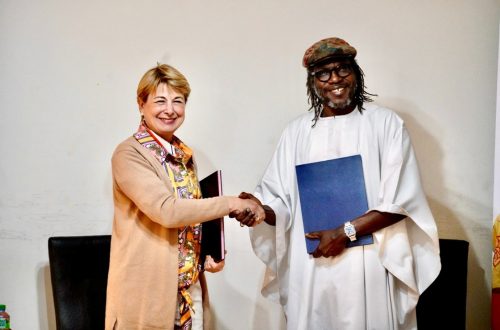
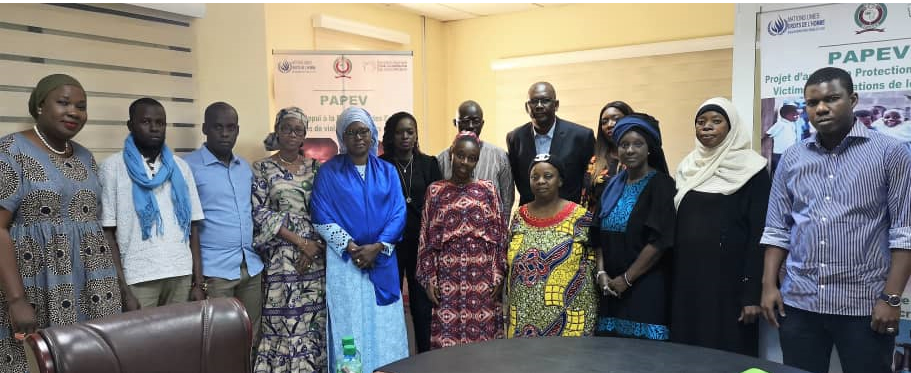
Dakar, January 30, 2020. Implementation of the regional dimension of the Project to Support the Protection of Children Victims of Rights Violations (PAPEV) officially began this Thursday, January 30, 2020, with a strategic planning meeting at the conference room of the Inter-Governmental Action Group against Money Laundering in West Africa (GIABA) in Dakar, Senegal. The opening ceremony of this meeting was chaired by Dr. Bolanlé ADETOUN, Director of the ECOWAS Gender Development Centre (CCDG), representing Dr. Siga Fatima JAGNE, ECOWAS Commissioner for Social Affairs and Gender.
The meeting was attended by several representatives of partner regional institutions working in child protection, notably the Office of the United Nations High Commissioner for Human Rights (OHCHR), the Senegalese ministries in charge of children and justice, the NGO ENDA Third World, Service Social International – West Africa (SSI-AO), and the West Africa Network for Child Protection (RAO). The main objective of this two-day meeting was to discuss with regional child protection organizations the arrangements and strategies for implementing PAPEV in the 6 beneficiary countries, in order to assess their level of understanding and knowledge of the project, and also to jointly develop a shared work program for the implementation of the initiative.
As a reminder, PAPEV is an initiative of the OHCHR Regional Office for West Africa, implemented by ECOWAS through its operational centre in charge of Gender, the CCDG. It is funded by the Italian Agency for Development Cooperation. The project, which covers six ECOWAS countries — Gambia, Guinea, Guinea-Bissau, Mali, Niger and Senegal — aims to strengthen initiatives already undertaken against the exploitation and abuse of children at the national level, which need to be sustained through an integrated regional approach. Its objective is to contribute to achieving the SDGs, notably SDGs 16 and 5, through the implementation of recommendations from international and regional child rights protection mechanisms, aimed at creating a safe and just environment for children who are victims of rights violations, as well as their legal, judicial and social care within the ECOWAS space.
Three main activities are planned in the component entrusted to the CCDG: strengthening or supporting the creation of child protection centres; carrying out a pilot project covering the 6 beneficiary countries to develop experiences and good practices for promoting the return of child trafficking victims; and finally, intensive advocacy with decision-makers to support reform processes and laws on child protection in West Africa.